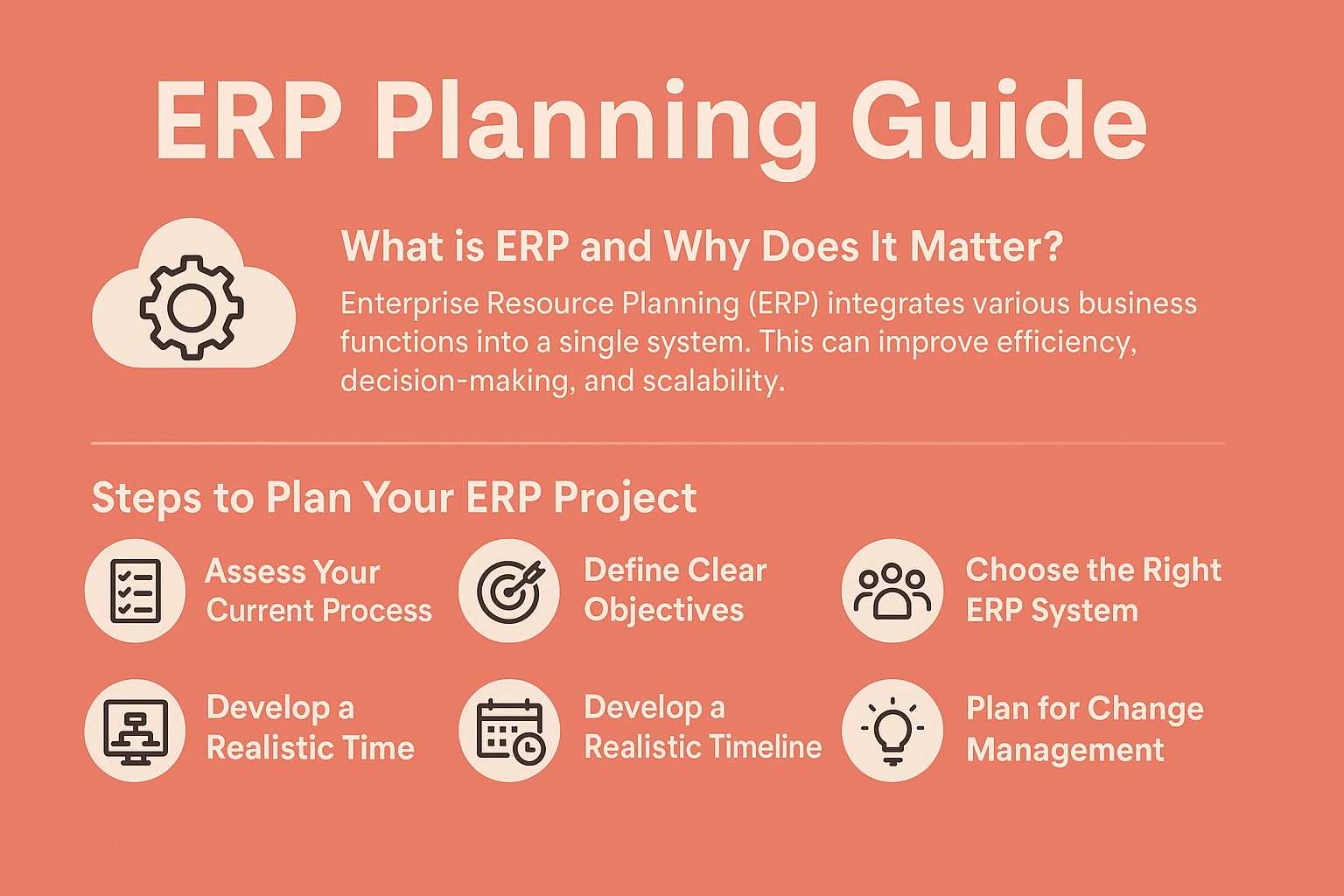
🧭 What is ERP and Why Does It Matter?
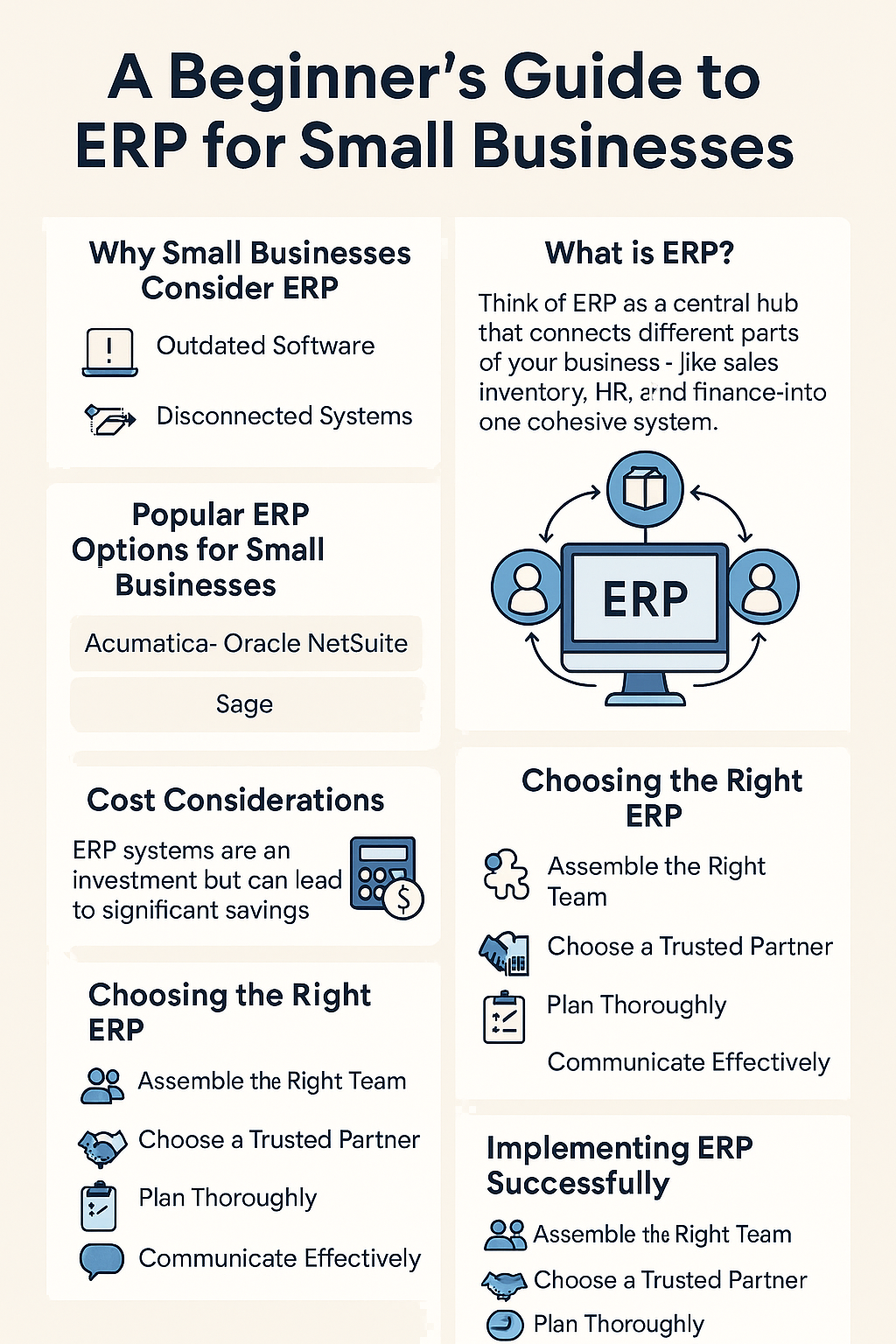
Enterprise Resource Planning (ERP) is like the central nervous system of your business. It integrates various functions—such as finance, human resources, supply chain, and customer relations—into a single, cohesive system. This integration allows for:
- Improved Efficiency: Automating routine tasks reduces manual work and errors.
- Better Decision-Making: Real-time data provides insights for informed choices.
- Scalability: As your business grows, ERP systems can adapt to new challenges.
📋 Steps to Plan Your ERP Project
Embarking on an ERP project involves several critical steps:
1. Assess Your Current Processes
Before implementing a new system, understand your existing workflows:
- Identify inefficiencies or bottlenecks.
- Determine which processes can be improved or automated.
2. Define Clear Objectives
Set specific goals for what you want the ERP system to achieve, such as:
- Reducing operational costs.
- Improving customer satisfaction.
- Enhancing inventory management.
3. Assemble the Right Team
Include stakeholders from various departments to ensure diverse perspectives:
- Project Manager: Oversees the implementation.
- IT Specialists: Handle technical aspects.
- End-Users: Provide insights into daily operations.
4. Choose the Right ERP System
Consider factors like:
- Functionality: Does it meet your business needs?
- Scalability: Can it grow with your business?
- User-Friendliness: Is it easy for staff to learn and use?
5. Develop a Realistic Timeline
Set achievable milestones and deadlines:
- Allow time for data migration.
- Schedule training sessions for staff.
6. Plan for Change Management
Prepare your team for the transition:
- Communicate the benefits of the new system.
- Provide support during the adjustment period.
💡 Tips for a Successful ERP Implementation
- Start Small: Implement the system in phases to manage complexity.
- Regular Training: Continuous education helps staff adapt to new features.
- Monitor Progress: Use key performance indicators (KPIs) to track success.
- Seek Expert Advice: Consultants can offer valuable insights and guidance.
🛠️ Common Challenges and How to Overcome Them
- Resistance to Change: Engage employees early and address concerns.
- Data Migration Issues: Clean and organize data before transferring.
- Budget Overruns: Monitor expenses closely and adjust plans as needed.
📈 Measuring Success Post-Implementation
Evaluate the ERP system’s impact by assessing:
- Operational Efficiency: Are processes faster and more accurate?
- Cost Savings: Has there been a reduction in expenses?
- Employee Satisfaction: Do staff find the system helpful and easy to use?
Implementing an ERP system is a significant undertaking, but with careful planning and execution, it can lead to substantial improvements in your business operations.
RELATED POSTS
View all